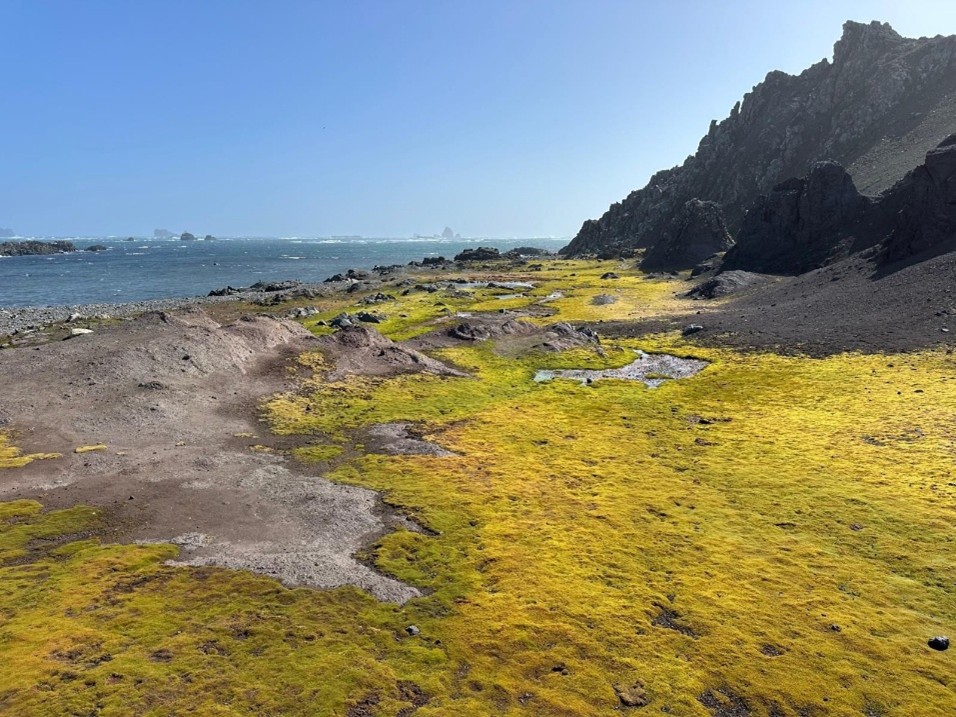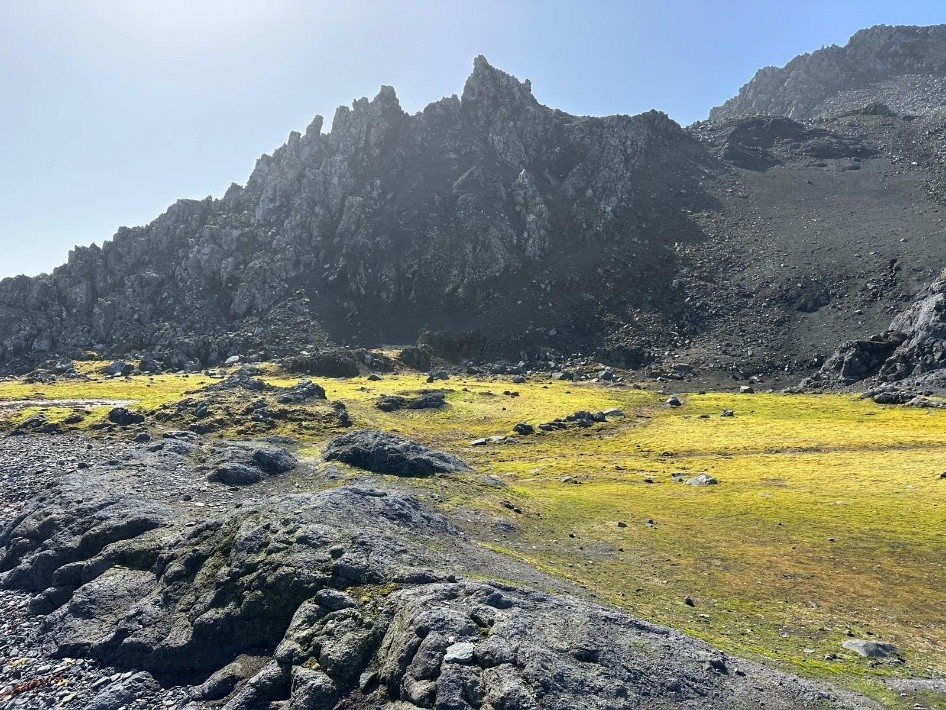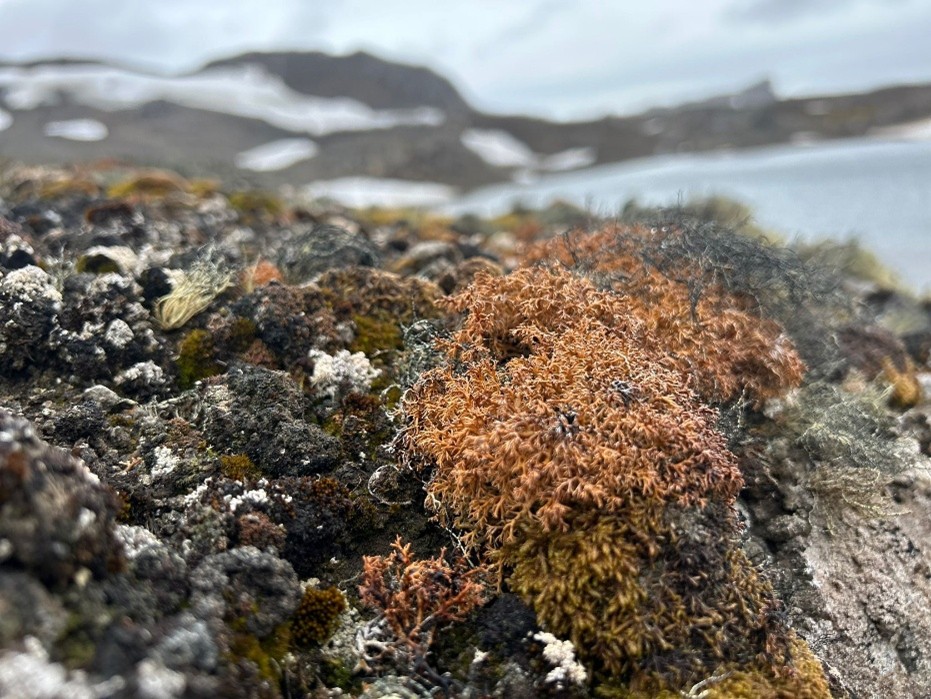



Antarctica is not just a land of ice and rocks. It is a unique space where silent, yet fundamental biological processes take place in extreme conditions. It is here that field research of Antarctic habitats is taking place, focused on the study of lower plants – mosses and lichens – as sensitive indicators of environmental change.
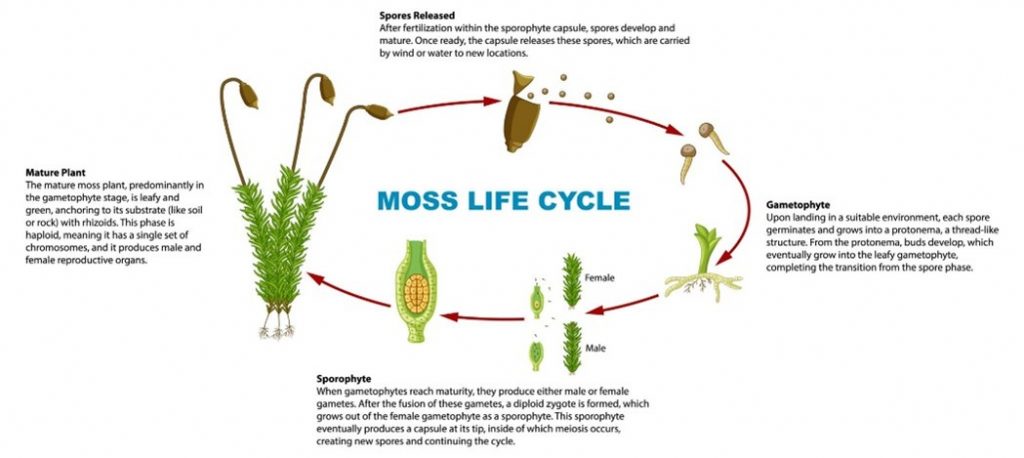
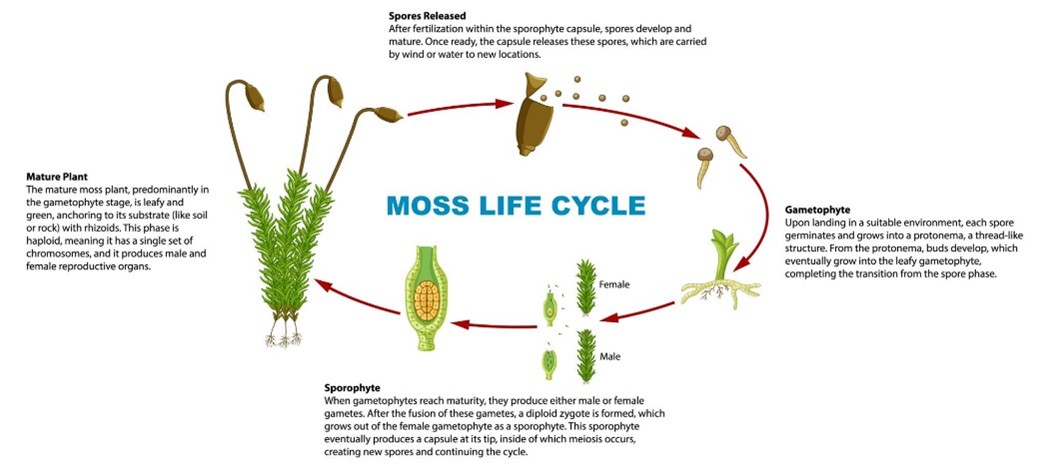
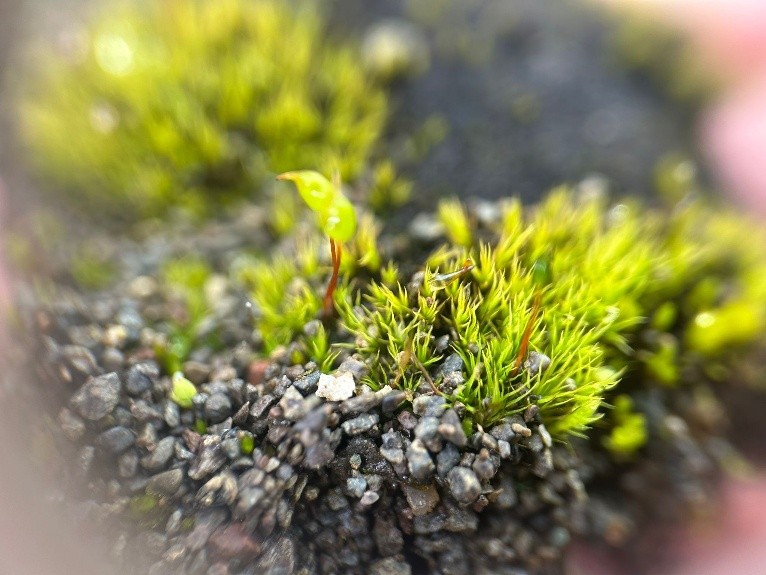
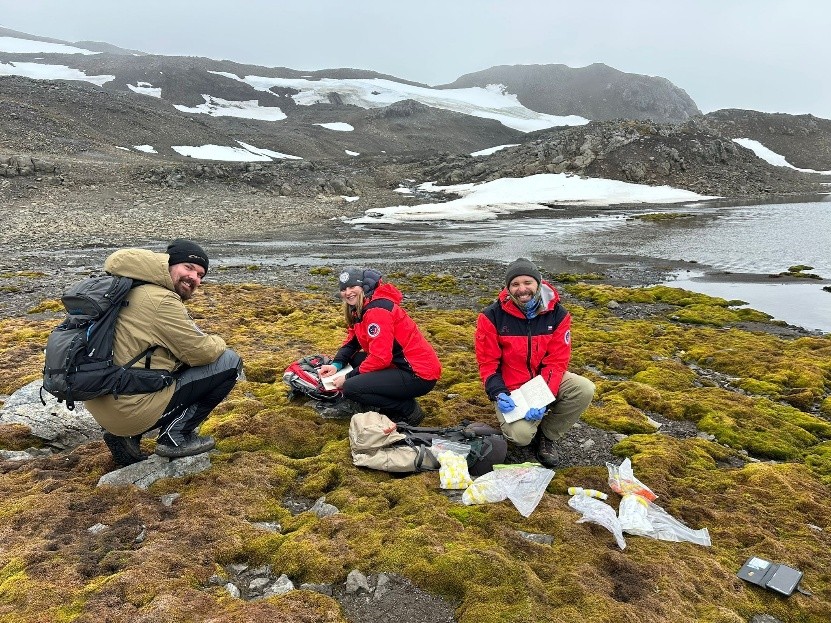
During the first field survey, researcher Assoc. Prof. Michal Goga, PhD. is specifically focused on searching for mosses with sporophytes. These inconspicuous structures represent key evidence of successful plant reproduction in extreme environments and provide valuable information about their adaptation, survival and stability of local ecosystems. Each sporophyte found is a small detail that helps to build a complex picture of Antarctic biodiversity.
The research is carried out with the professional and institutional background of the Technology and Innovation Park UPJŠ (TIP-UPJŠ), which creates space for connecting high-quality basic research with applied outputs. Antarctica is not only the destination of the expedition, but also a place where it is verified how scientific ideas are transformed into real knowledge.
King George Island: a place of systematic observation
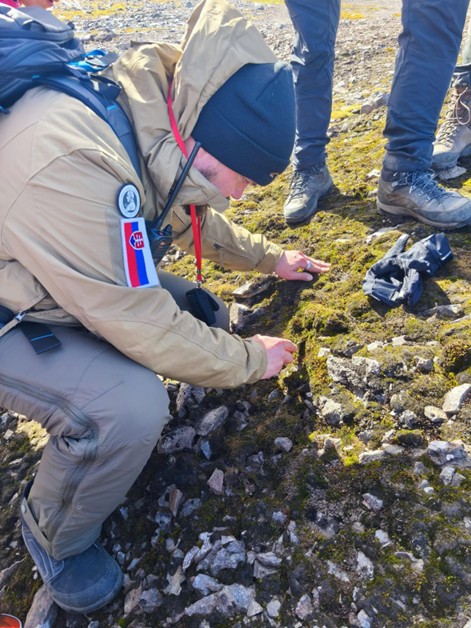
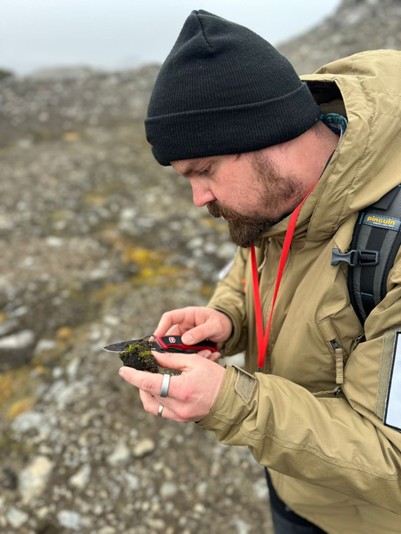
One of the main research sites is King George Island – an area that has long been the subject of scientific interest and continuous monitoring. It is here that Assoc. Prof. Michal Goga PhD. systematically collects and documents mosses and lichens, organisms that are often overlooked in ordinary environments, but in Antarctica they play a fundamental role in assessing environmental conditions and their changes.
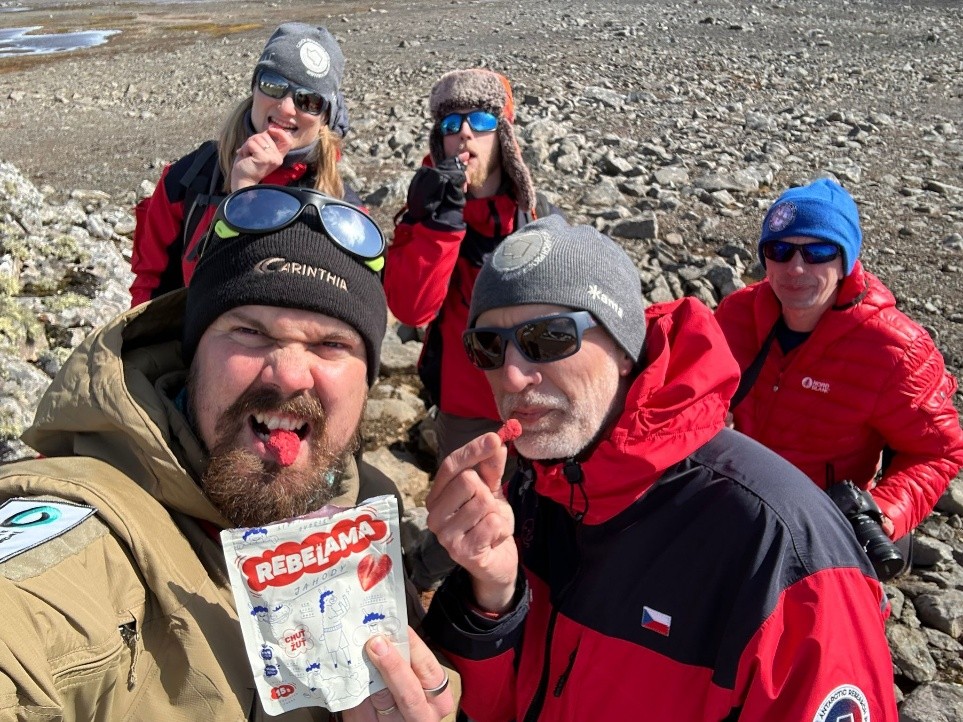
In the field, the boundaries between individual scientific disciplines are naturally blurred. The cooperation of the expedition members is based on practical needs and a common goal, not on a formal division of roles. It is this everyday interdisciplinary interaction that creates space for the exchange of experiences and new perspectives on the problems being studied.
Discipline as the basis of scientific work
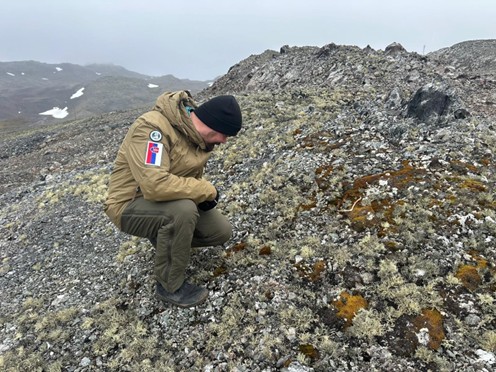
A fundamental part of research is thorough documentation. Accurate recording of the location, conditions of discovery, and detailed description of each sample are the basis for further analysis and interpretation of data. This is a less visible, but absolutely crucial part of scientific work, without which it would be impossible to achieve reliable and reproducible results.
Antarctica is not a place for effects or shortcuts. It is an environment that requires focused work, precision, and respect for conditions that can change from minute to minute.
Science in the rhythm of the weather
Field research on King George Island is directly dependent on current meteorological conditions. A suitable “weather window” is often waited for days. When it arrives, it is followed by several hours of travel to the field, sample collection, and return – always with the safety of the team in mind.
As Michal Goga describes from the field:
“We wait for suitable weather, we often go far from the station and conditions can change very quickly. That’s when experience, data and teamwork are decisive. Climatologists can tell us with high accuracy what awaits us in the next few hours.”
When field trips are not possible, research moves to the “day” – to data processing, writing professional texts, preparing projects and studying literature. There are no weekends in Antarctica, only a continuous research process.
Where ideas become solutions
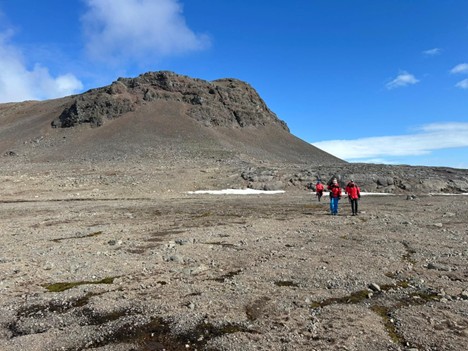
The most demanding part of the expedition awaits the team on James Ross Island, where conditions will be even more demanding and room for improvisation is minimal. This makes the importance of precise preparation, discipline and scientific background even more important.
For the Technology and Innovation Park UPJŠ, it can be stated that this is exactly what an environment looks like where ideas become solutions – even in sub-zero temperatures, strong winds and in one of the most demanding environments on Earth. Antarctic research is proof that quality science is born where expertise, teamwork and respect for the reality of the terrain meet.