

How can artificial intelligence be used in research and education while maintaining critical thinking and taking responsibility for the outcomes? This question was the focus of a visit by Dr. Richard Luke Daniels from The College of Idaho (USA) to Pavol Jozef Šafárik University (UPJŠ). As part of the Fulbright Specialist Program, he conducted workshops and lectures for academic staff, researchers, doctoral students, and pupils from primary and secondary schools.
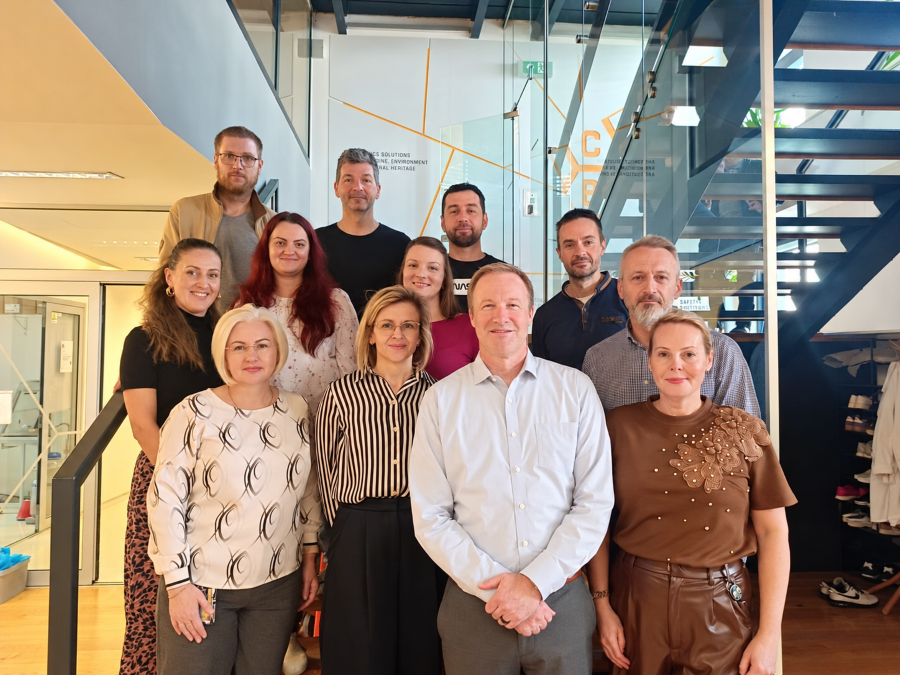
The program, which took place from October 14 to October 23, 2026, was organized by the Centre for Interdisciplinary Biosciences at the UPJŠ Technology and Innovation Park (CIB TIP-UPJŠ, Jesenná 5, Košice). In addition to the core theme of the responsible use of artificial intelligence, Dr. Daniels presented his own scientific work and highlighted the importance of international scientific collaboration to the students.
Workshops and Lectures on the Use of AI in Science
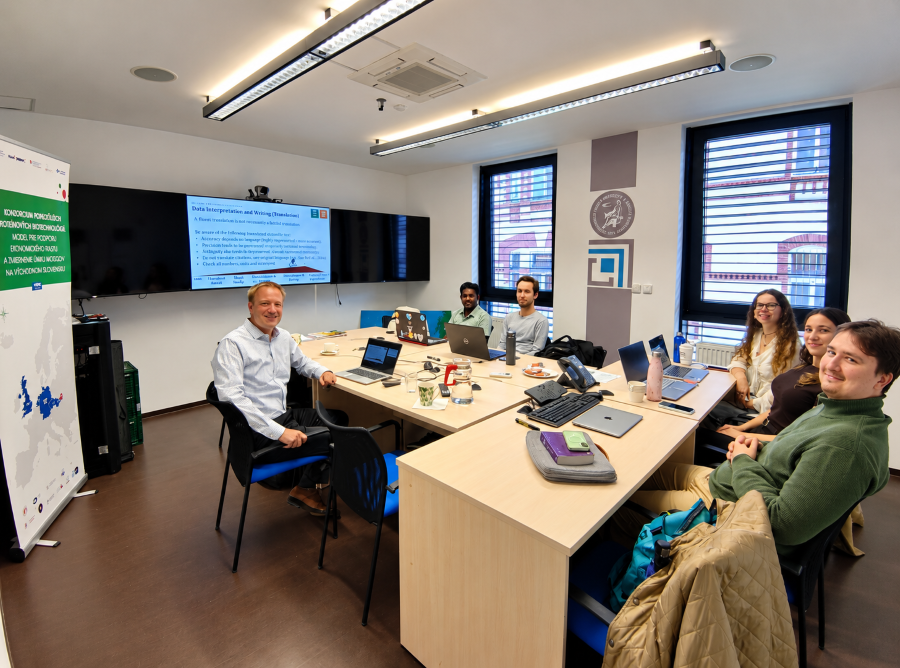
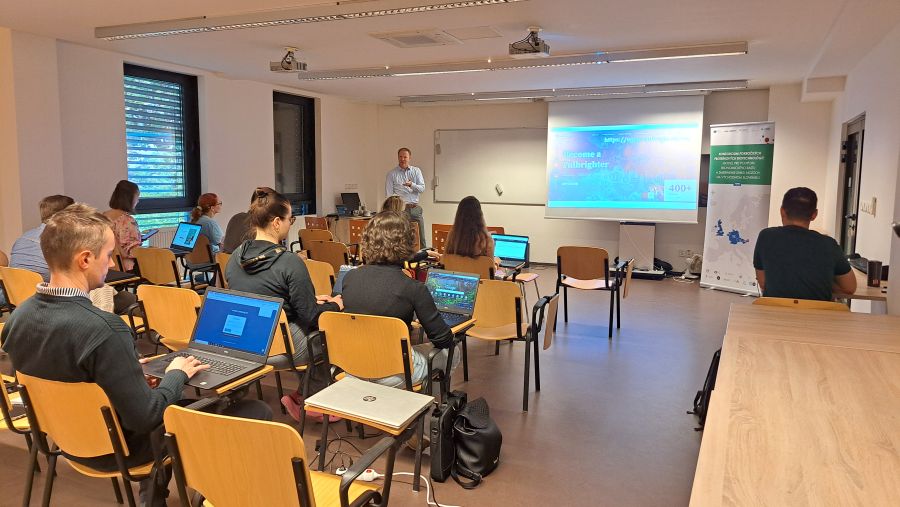
The centerpiece of the program consisted of two-day workshops on the application of AI in scientific work. Titled “AI in Science at UPJŠ: Responsibly from Research to Publication”—and designed for researchers, academic staff, and doctoral students—the workshops were held on October 15 and 22. Participants explored the potential uses of AI in research and scientific writing, compared human-generated text with AI-generated content, and examined the ethical boundaries surrounding its use. Discussions covered the policies of scientific journals and grant agencies, the verification of research outputs, data handling, plagiarism, and the transparent disclosure of AI usage. The practical component included crafting prompts for AI, conducting literature searches, planning research, preparing project proposals and protocols, and analyzing data. Emphasis was placed on the limitations of these tools and the responsibility of the author: while AI can support scientific work, the assessment of the accuracy and quality of the results remains the researcher’s task.
Similar topics were addressed in a workshop for master’s and doctoral students titled “AI in Science: How to Use It While Maintaining Your Own Judgment,” held on October 16 and 19. The content was tailored to the students’ needs and included practical text comparisons, the ethics of scientific writing in theses and dissertations, and the use of AI in research planning. Participants received certificates upon completion of the workshop.
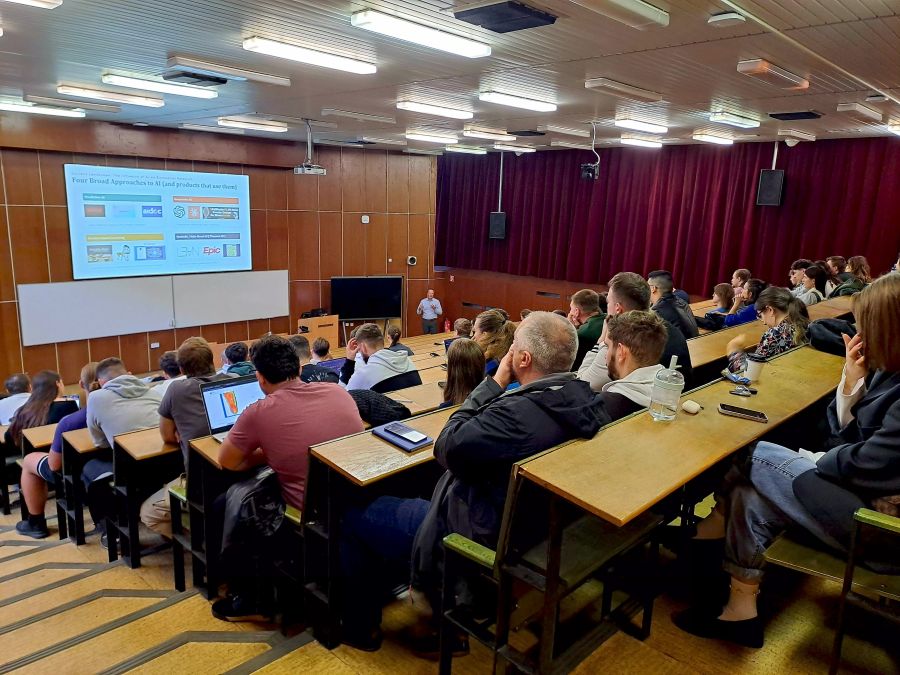
Dr. Daniels supplemented the workshops with two lectures titled “From Prompt to Publication.” The first was held as part of a joint seminar series organized by the Department of Biophysics and CIB. The second was intended for doctoral students at the Technical University of Košice and took place on the final day of his visit; it was attended by approximately 45 students.
Science Without Borders – Reaching the Younger Generation
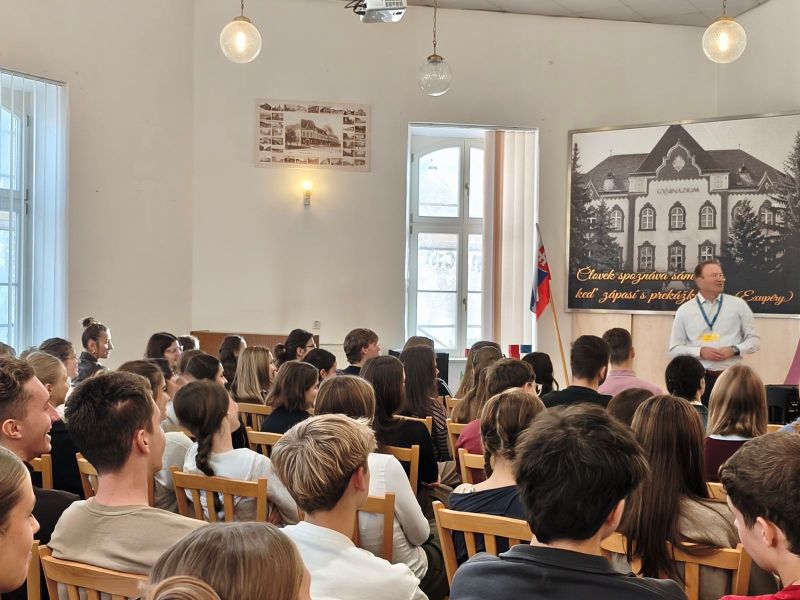
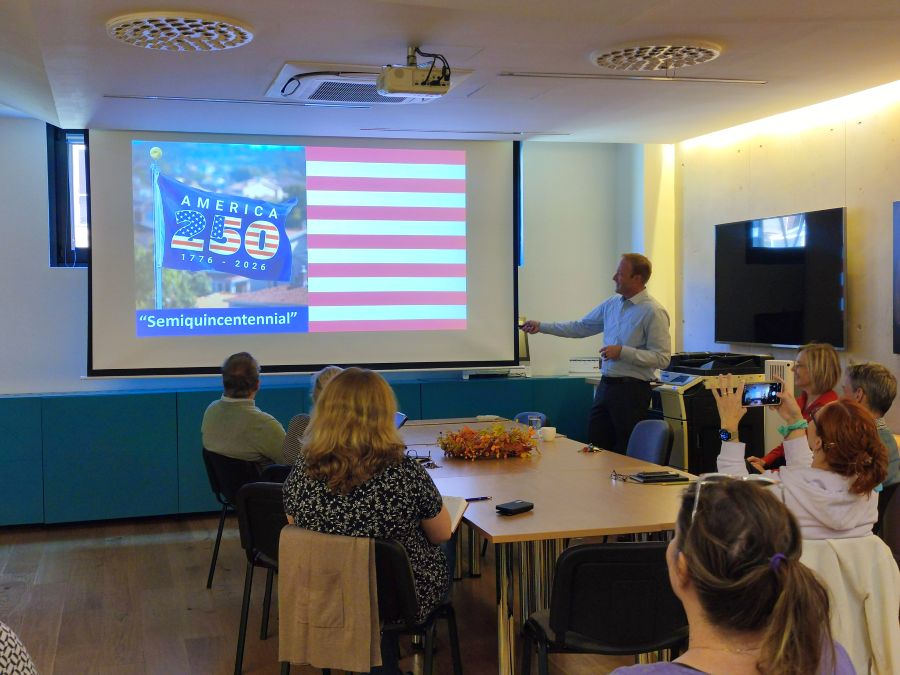
During his visit, Dr. Daniels also met with primary and secondary school students. At the Šrobárova Grammar School, he delivered a lecture titled “Science without Borders: From Curiosity to Global Discoveries.” Using examples from U.S. history, he explained to approximately 80 students how international collaboration has contributed to scientific breakthroughs and the development of medicines. He also touched upon the importance of curiosity, critical thinking, and teamwork. The event also served to commemorate the 250th anniversary of the adoption of the U.S. Declaration of Independence.
A second lecture for students, “AI Proposes, Humans Decide,” took place at the CIB premises on Jesenná Street. It was attended by 50 Slovak and Italian students participating in an Erasmus project. Together with Dr. Daniels, they discussed how to utilize AI, verify its outputs, and maintain one’s own independent judgment.
Focus on Cancer Research
During his visit, Dr. Daniels also presented his research on the SPARC protein. As part of the regular seminar series held by Professor Erik Sedlák’s group at CIB TIP-UPJŠ, he discussed gene expression and methods for discovering new therapeutic agents for the treatment of cancer.
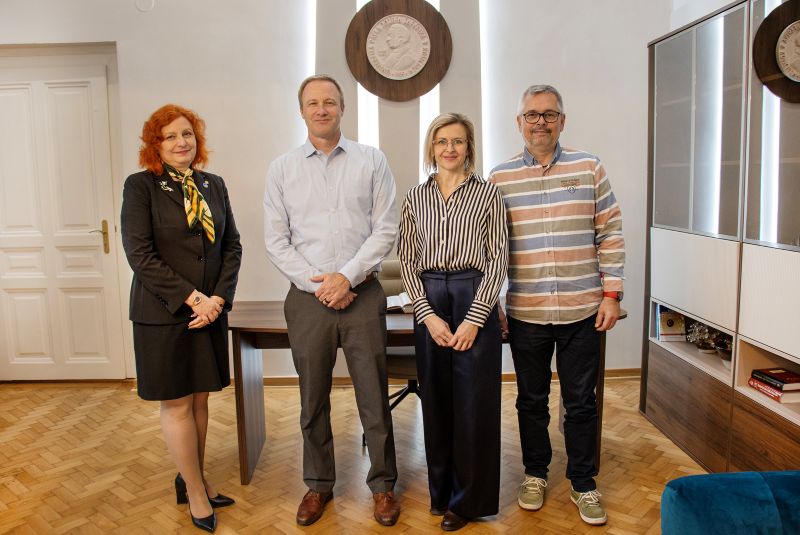
Dr. Daniels’s visit concluded on October 23, 2026, with a meeting at the UPJŠ Rectorate hosted by the Vice-Rector for International Relations, Prof. Slávka Tomaščíková, PhD. It facilitated an exchange of experience between the American and Slovak academic communities and emphasized the need to combine the use of new technologies with critical thinking, the verification of information, and responsibility for one’s own decisions.
Dr. Daniels’s visit was supported by the APBC project (09I02-03-V01-00021), funded by the European Union under the NextGenerationEU initiative through the Recovery and Resilience Plan of the Slovak Republic.