



The Antarctic research stay of Assoc. Prof. Michal Goga,PhD., an expert in lichen biology, significantly contributes to the fulfillment of the goals of the Advanced Protein Biotechnology Consortium (APBC) project. Research in one of the most extreme environments on Earth provides a unique approach to organisms that have developed extremely effective molecular survival strategies during evolution.
Antarctic lichens can tolerate extremely low temperatures, long-term drought, intense ultraviolet radiation, oxidative stress, and minimal nutrient availability. Thanks to these properties, they represent ideal model organisms for studying biological resilience at the molecular level and the mechanisms by which living systems maintain functionality in conditions that would be lethal for most organisms.
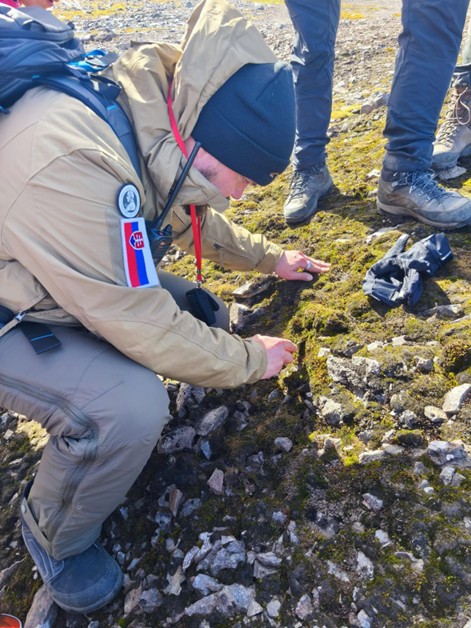
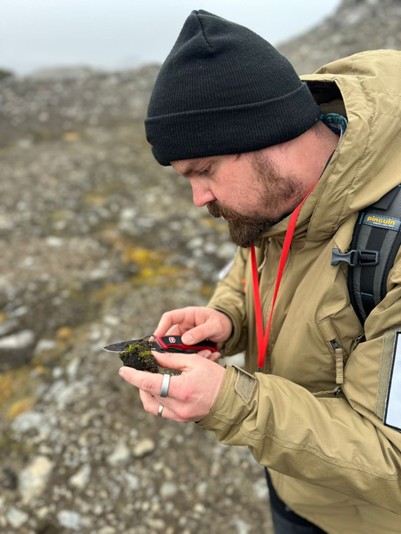
The research results indicate that lichens produce highly stable proteins, capable of maintaining their structure and biological activity even under strong physical and chemical stress. Such proteins are particularly promising for further development within APBC, with potential applications in medicine, biotechnology and industry, where the stability and reliability of biomolecules is a key factor.
In addition to proteins, lichens are a source of a rich palette of secondary metabolites with known antioxidant, antimicrobial, photoprotective and anti-inflammatory effects. Their study supports the interdisciplinary nature of the APBC consortium and creates space for translational research that connects basic research with practical applications and cooperation with innovative and industrial partners.
Understanding the mechanisms by which lichens stabilize proteins, regulate cellular balance and protect themselves from molecular damage can serve as inspiration for the design of new, improved biomolecules. Thanks to his unique field experience and access to extremophile biological systems, the research of Assoc. Prof. Michal Goga, PhD. The discovery potential of the APBC consortium strengthens the link between biodiversity and modern biotechnology and significantly contributes to the overall innovation capacity of the project.