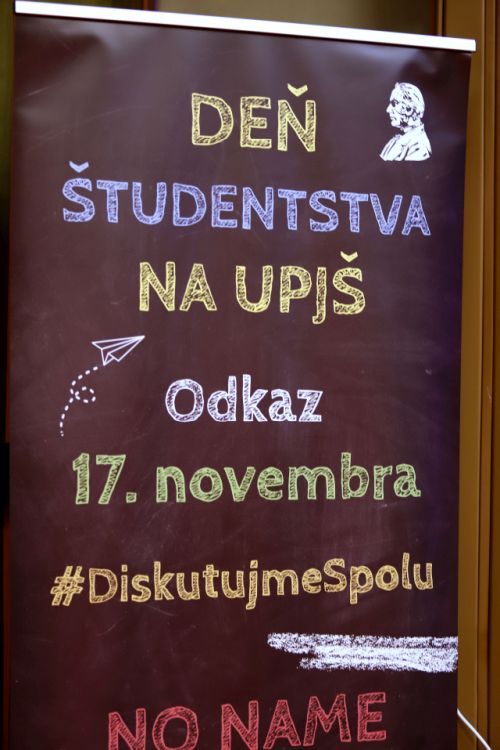



Pavol Jozef Šafárik University in Košice prepared a series of events entitled THE FUTURE BEGINS TODAY – TOGETHER FOR A BETTER UNIVERSITY AND FUTURE, during which the university management, together with its students and employees, commemorated the legacy and significance of November 17. Prof. MUDr. Daniel Pella, PhD., Rector of UPJŠ in Košice, granted students a day off on November 17, 2025, to motivate them to participate in commemorative, educational, and sporting activities, as well as to discuss freedom, democracy, and our future on the occasion of the Day of Struggle for Freedom and Democracy and International Students’ Day. “We consider it essential to remember the significance of the Velvet Revolution and to actively engage our students in reflecting on the historical events that shaped our present and ensured, among other things, academic freedom. This way, we strive to preserve the legacy of November 17, which reminds us every year of the courage and values that allow us to live, create, study, and develop our society freely,” he emphasized.
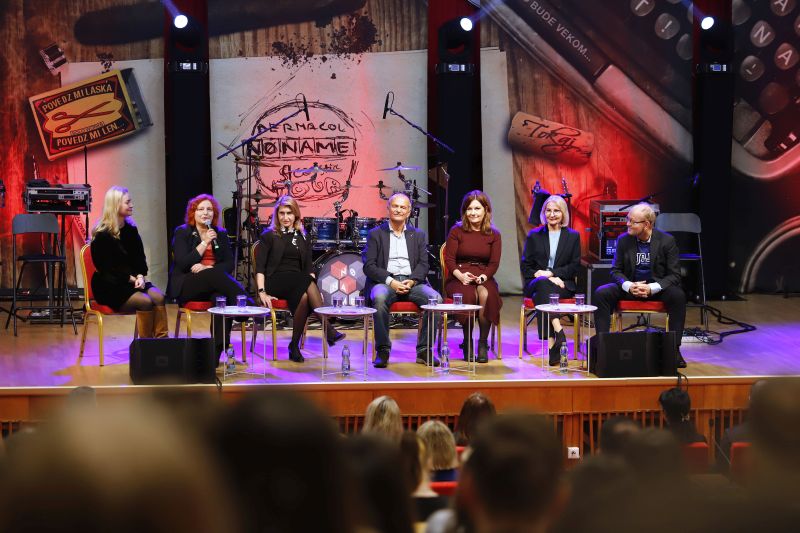
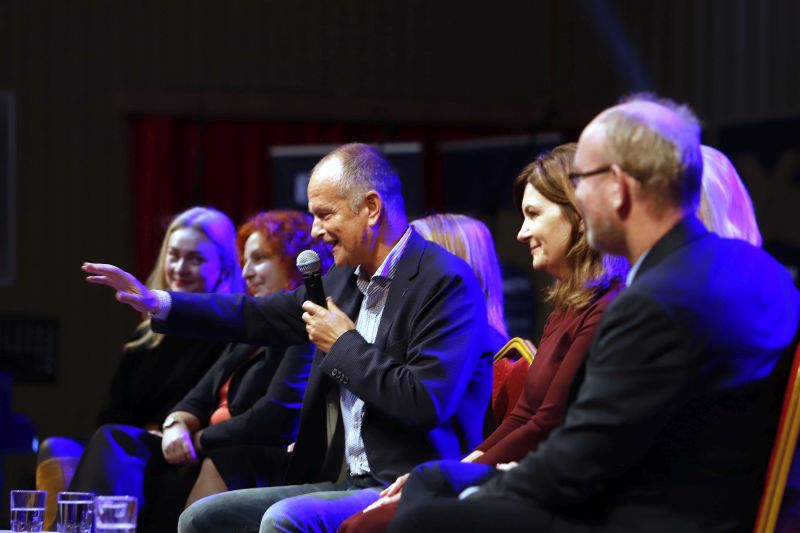
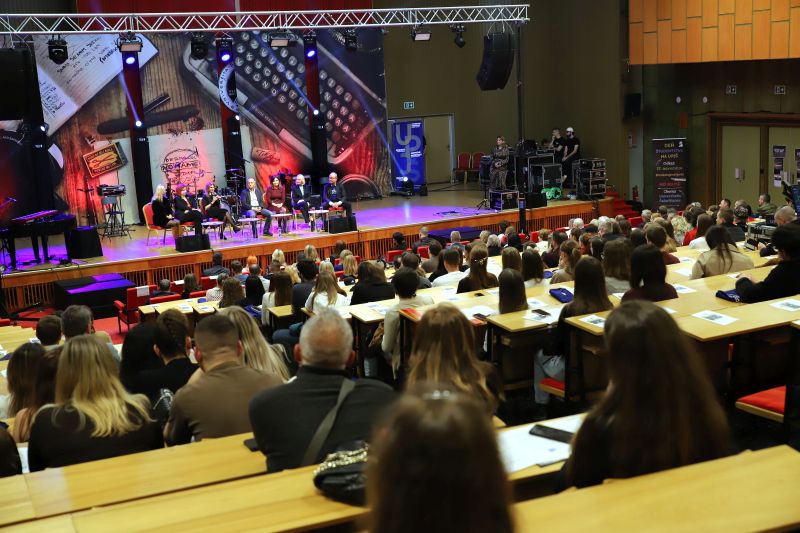
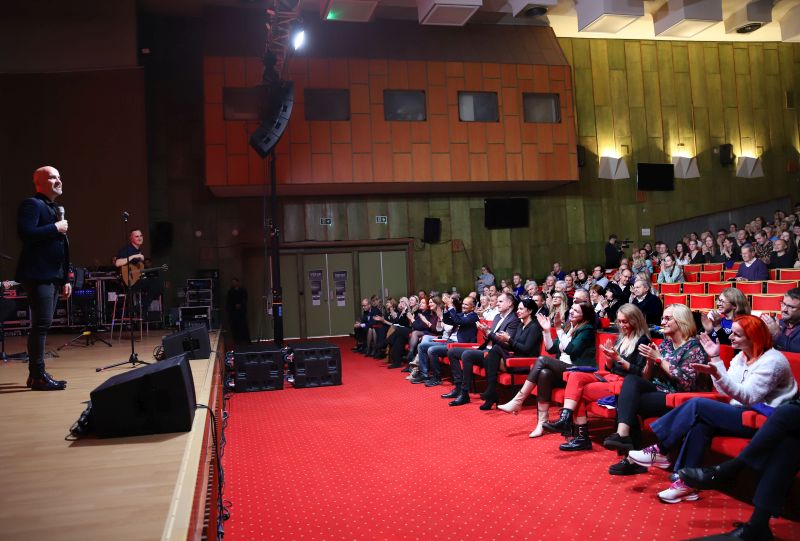
On Monday, November 17, 2025, the evening commemorative program began with a speech by Rector Professor Daniel Pella and continued with a discussion between the management of UPJŠ in Košice and its students, employees, and guests who accepted the invitation in the Auditorium of the Faculty of Medicine of UPJŠ in Košice. Members of the UPJŠ management reminisced about the period before November 17, 1989, and described to the students in particular the opportunities that the change of regime had brought them.
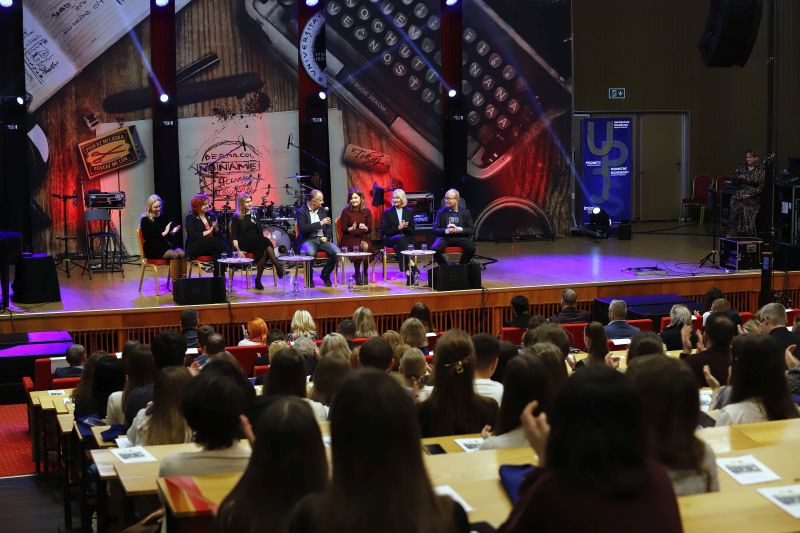
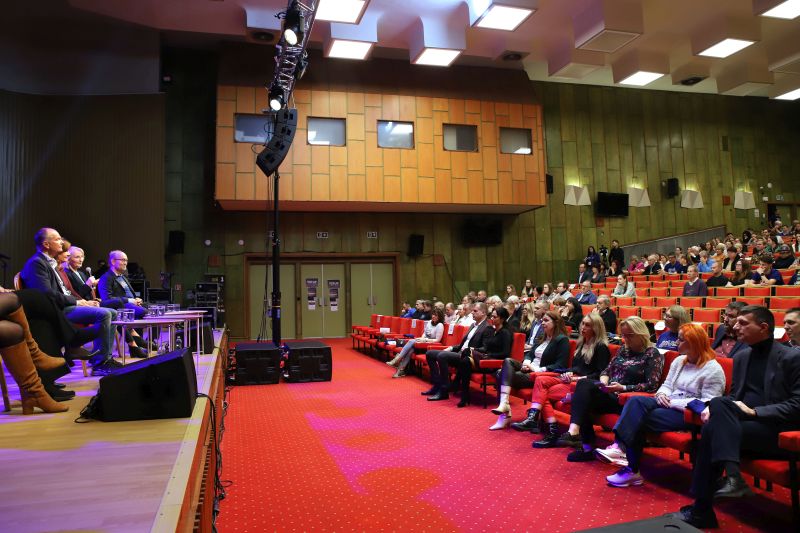
Prof. MVDr. Monika Halánová, PhD., Vice-Rector for Academic Qualifications and Doctoral Studies: “We reached a stage where it is very important to stand up for our opinions, for the truth, and for the values we consider important, with respect and mutual esteem. I am grateful that, as in the past, it is students who are initiating polite forms of expressing their opinions, but also their dissatisfaction or need for change. I hope that what we fought for on November 17, 1989, will continue and bring a better future.”
Prof. RNDr. Renáta Oriňaková, DrSc., Vice-Rector for Science, Research, and Projects: “Before 1989, universities were centrally managed. Decisions were made from above about who would advance in their careers and what scientific topics could be researched. Some areas were directly controlled and censored to ensure they were in line with the ideology. November 1989 brought major changes: state borders were opened, scientists were able to travel and lecture at international conferences, and they no longer had to collaborate only within socialist countries. They learned that quality is crucial for science.”
Dr. h. c. prof. MUDr. Pavol Jarčuška, PhD., Vice-Rector for Strategic Development and Investment: “As young doctors, we were persuaded to join the communist party. Before, we didn’t have an academic senate, we couldn’t express our opinions and do what we wanted. Currently, we want students to be able to put their research and education into practice during their studies. Today, every talented student can start a startup with the support of the university, city, or region. You can travel, make contacts abroad, research freely, think freely, and decide freely.”
Doc. Ing. Silvia Ručinská, PhD., University Professor, Vice-Rector for Internationalization: “For me, November 17, 1989, is definitely associated with democratization and freedom in all its forms. Personally, perhaps most of all with freedom of expression, movement, and research. When we talk about freedom, I think it is essential for society that freedom does not mean the expression of self-will. Freedom should always be in harmony with respect and tolerance. In this sense, I was pleased by the speech of the dean of the Faculty of Medicine, in which he stated that it is important to take care of freedom every day. When I had the opportunity today to see a thematic exhibition by students of the Faculty of Arts on how they perceive democracy, I became convinced that we need not fear for our freedom.”
Dr. h. c. prof. Mgr. Slávka Tomaščíková, PhD., Vice-Rector for International Relations: “Until 1989, English language studies were only offered once every two years. After 1989, the composition of the subjects taught changed, lecturers from France and Great Britain arrived, and mobility programs began to operate, within which we had only a limited number of places available. Today, we can travel almost without restriction. At our university, every student has the opportunity to travel at least once during their studies as part of all mobility programs.”
JUDr. Ľudmila Elbert, PhD., university associate professor, Vice-Rector for Undergraduate and Lifelong Learning: “For me, this period is associated, among other things, with fear, because all those who took to the streets to demonstrate at that time went there with the question of what it would bring and what they were risking. They could have been fired from their jobs or expelled from school. On the other hand, it all brought with it a huge responsibility. We should take responsibility for what we do, what we say, and where we are headed. The fact that students today can choose the university they prefer is thanks to November 17.”
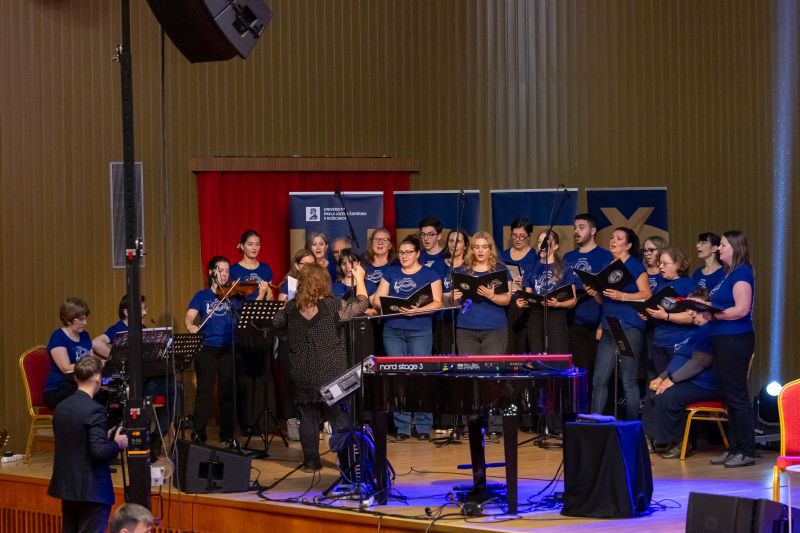
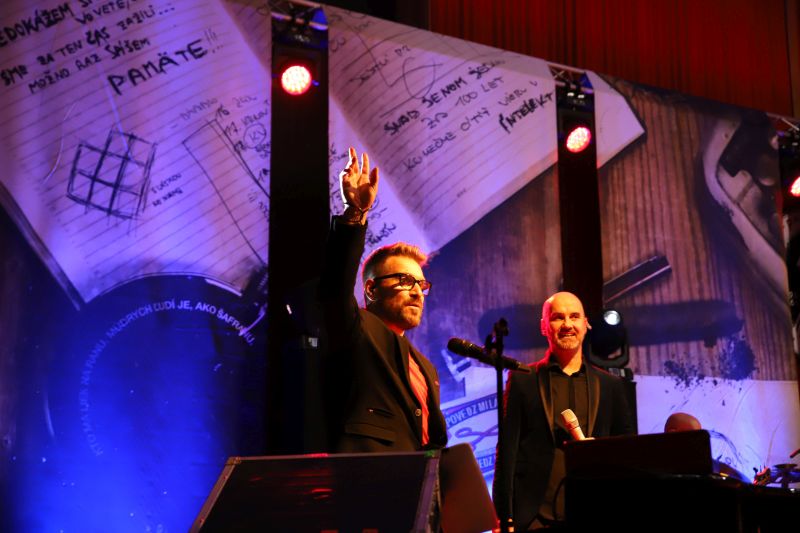
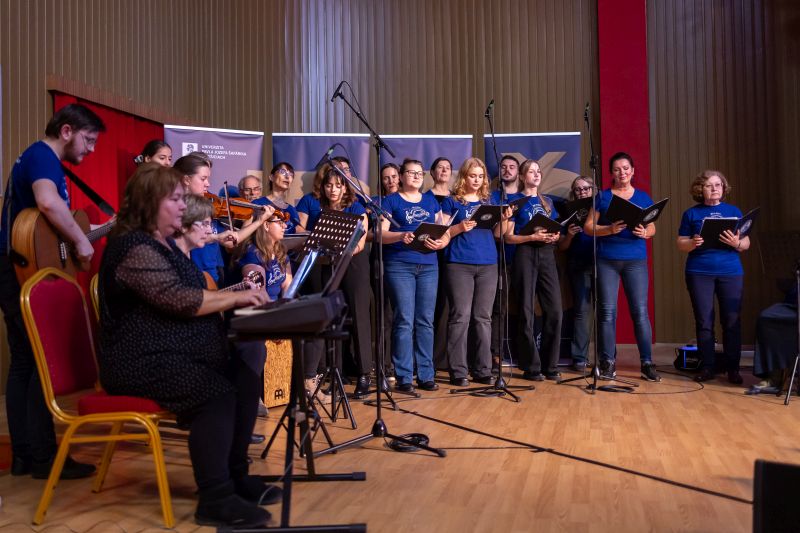
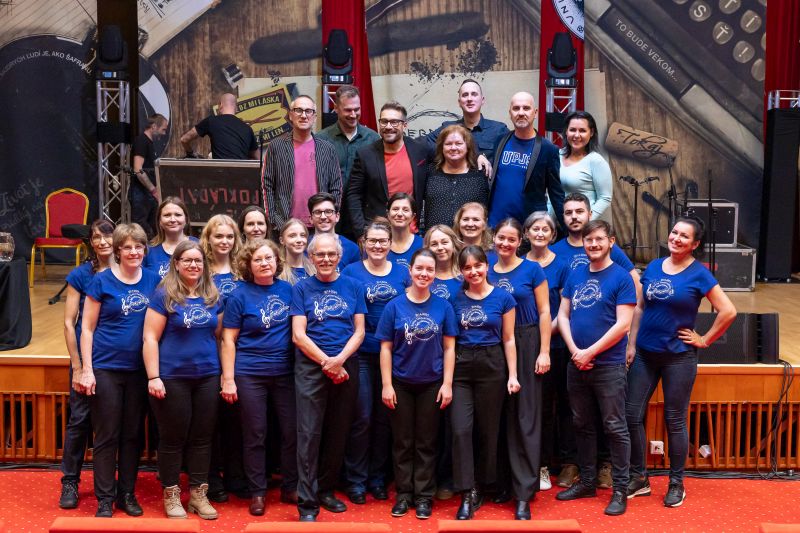
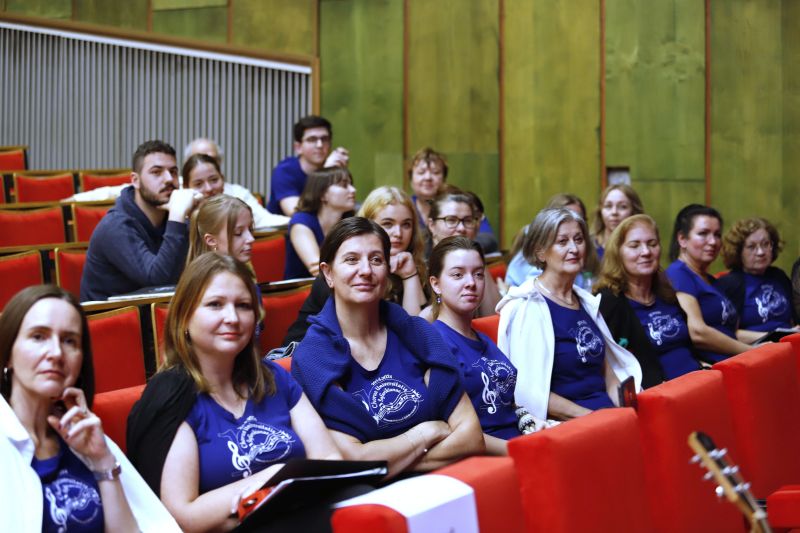
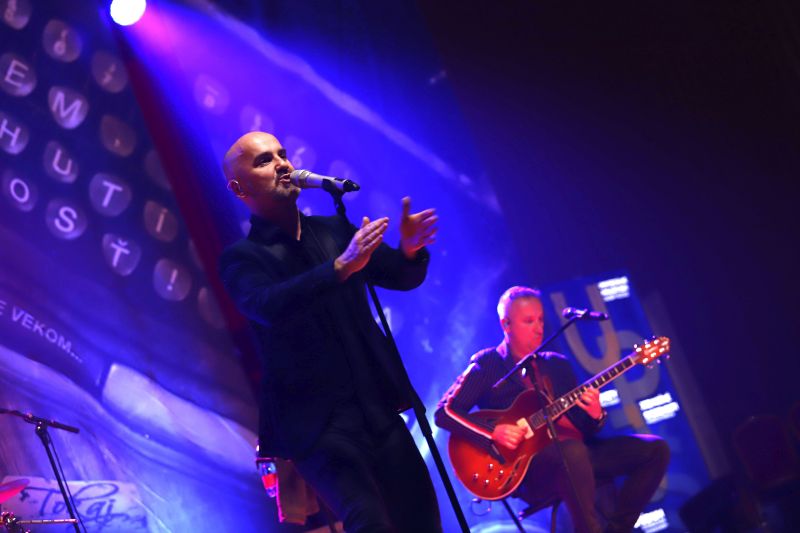
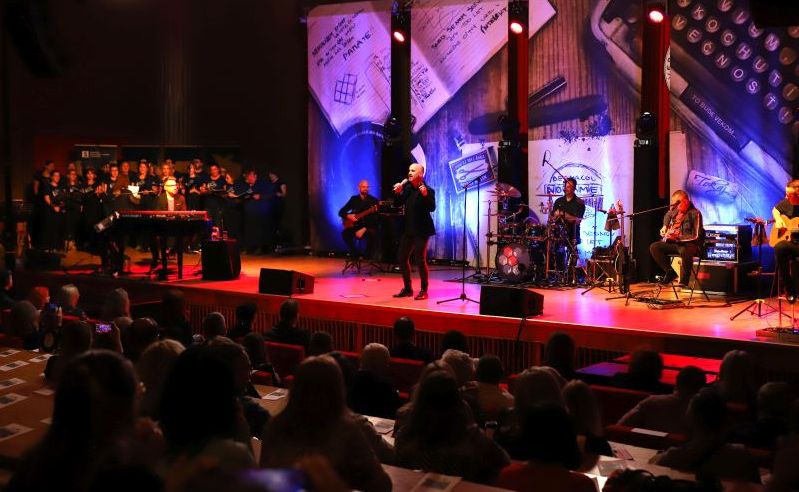
After the discussion, the university choir Chorus Universitatis Šafarikianae performed. Under the direction of choirmaster Mgr. Jana Havrilová, they sang three thematic songs: Bratříčku, zavírej vrátka by Karel Kryl, Modlitba pro Martu by Marta Kubišová, and the unofficial anthem of the Velvet Revolution, Sľúbili sme si lásku by Ivan Hoffman. The highlight of the evening was a performance by the band No Name. “Slovakia is a promised land. There is room for improvement, but it is a place where you can live, create, have a business, raise children… May this status quo last, if possible, for eternity,” said the frontman of the well-known Slovak band, Mgr. art. Igor Timko, ArtD., introducing their song Večnosť (Eternity), which they performed to those present, accompanied by members of the university choir, creating an extraordinary artistic experience.
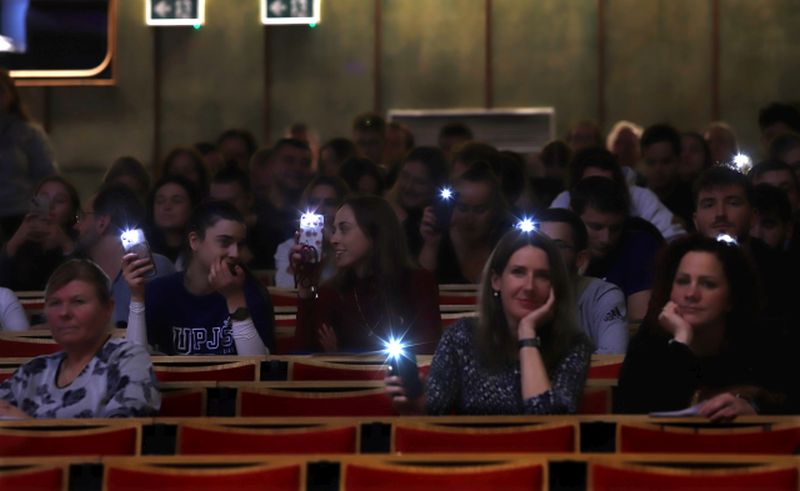
The event provided an opportunity to reflect on the values of courage, freedom, and creativity, which enable the entire academic community to develop knowledge, our alma mater, and society. “We want the younger generation of students to understand that we care about their opinions and freedom of expression. That we are willing to listen to them because they have something to offer this society. It is our students who will shape the future of our country. These freedoms are not guaranteed everywhere in the world, so they must be protected. Only open and honest dialogue, mutual respect, and esteem will enable us to move forward. We educate and nurture our students in the spirit of these values,” concluded Professor Pella, Rector of UPJŠ.
Watch the STVR report Concert at the University of Košice
Fotografie: Eugen Bernáth
Veronika Janušková